
Walking Meditation

There goes my crazy wife
With her cinnamon eyes
And her simple life

On a sunny day she’d rather
     walk than ride
With her hair pulled up
And her lengthy stride

The clouds of the north
And the clouds of the south
Are separated by her
     seldom ceasing smile

Her heart beats slow and steady
Pumping praises to her
     Prince of Peace

“Jesus, Jesus, Jesus
Intercede Jesus, Jesus
Plant a seed Jesus”

She tears for the searching souls
     that surround her
She walks on her knees


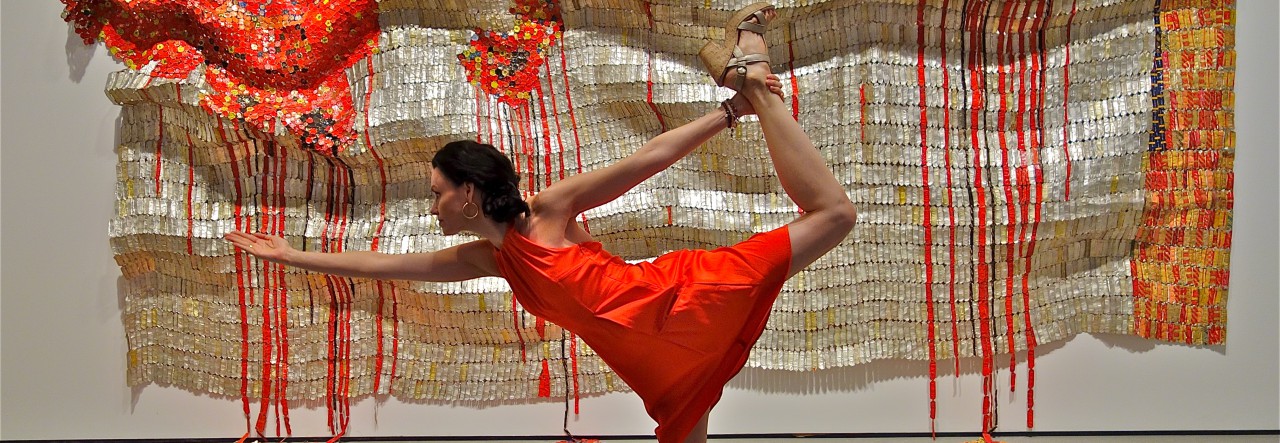
My husband wrote this sweet poem during our early married years. Walking was my moving meditation and prayer time, connecting me to nature and the Divine. Many years later, yoga opened my heart wide open and became my favorite form of moving meditation and connection! ❤️ Urban trekking, desert hiking, and downward dog-ing are all amazing ways to tune into Spirit, discern truth, heed wisdom, and fully integrate body, mind, and soul.

❤︎ What do YOU need today?

❤︎ Are you seeking wisdom, or direction, or an answer to a deep seeded question? 

❤︎ Is there something you would like to release, creating space for the new?

Walking Meditation Instructions by Tara Brach

Meditation is a practice of presence that you can bring alive in all settings and activities. The formal training in walking meditation can be particularly valuable for helping you to cultivate an awareness of your embodied experience in each moment, allowing you to bring your body, heart, and mind together as you move through life.
Begin by choosing a place – an indoor or outside walking path about 10-30 paces long. Start by standing still and sensing the weight of your body at your feet, feeling your muscles supporting and stabilizing you. Your hands can be in whatever position is most comfortable – resting easily at your sides, folded gently in front of you, or at your back. In the stillness, remain relaxed and alert.
As you begin walking, start at a slower pace than usual, paying particular attention to the sensations in your feet and legs: heaviness, lightness, pressure, tingling, energy, even pain if it’s present. For the walking practice, this play of sensations – rather than the breath or another anchor – is often the home base for our attention.
Be mindful of the sensations of lifting your feet and of placing them back down on the floor or earth. Sense each step fully as you walk in a relaxed and natural way to the end of your chosen path. When you arrive, stop and pause for a moment. Feel your whole body standing, allowing all your senses be awake, then slowly and mindfully – with intention – turn to face in the other direction. Before you begin walking, pause again to collect and center yourself. If it helps, you can even close your eyes during these standing pauses, often called “standing meditation.”
As you’re walking, it’s quite natural for your mind to wander. Whenever it does, you might mentally pause, perhaps noting inwardly the fact of thinking, or even where your mind went: planning, worrying, fantasizing, judging. Then, gently return your attention to the sensations of the next step. No matter how long you’ve spent lost in thought, you can always arrive right here, bringing presence and care to the moment-to-moment sensations of walking.
During the walking period you might alter your pace, seeking a speed that allows you to be most mindful of your experience. In this way, you’ll move back and forth on your pathway, discovering that you are not really going anywhere, but are arriving again and again in the aliveness that is right here.

Reflection & Insight:
How did this experience feel in the body? Sensations? Body temperature? What happened in the mind? Did thoughts arise from the past, present, or future? Were you planning, worrying, fantasizing, or judging? How did this meditation feel in your spirit? Write down any insights, any information received.


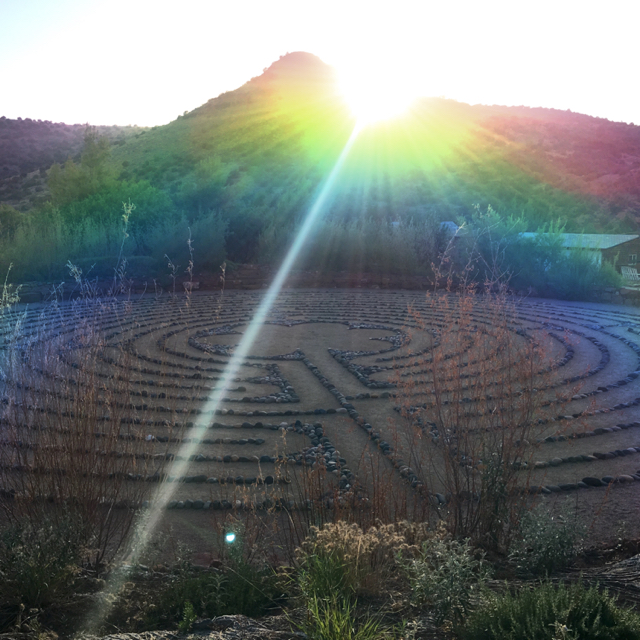
“The LABYRINTH is receiving an amazing amount of attention, because walking the calming, circuitous path addresses many psycho-spiritual needs. Whoever you are, walking the labyrinth has something to offer. If a project is challenging you, walking can get your creative juices flowing. When struggling with grief or anger, or a physical challenge or illness, walking the labyrinth can point the way to healing and wholeness. If you’re looking for a way to meditate or pray that engages your body as well as your soul, the labyrinth provides such a path. When you just want reflective time away from a busy life, the labyrinth can offer you time out.” ~ Melissa Gayle West, Exploring The Labyrinth

Find a labyrinth near you! 😊 labyrinthlocator.com

Wherever you are at, be all there. ~ Jim Elliot
IMG_9070

Walking Meditation

There goes my crazy wife
With her cinnamon eyes
And her simple life

On a sunny day she’d rather
     walk than ride
With her hair pulled up
And her lengthy stride

The clouds of the north
And the clouds of the south
Are separated by her
     seldom ceasing smile

Her heart beats slow and steady
Pumping praises to her
     Prince of Peace

“Jesus, Jesus, Jesus
Intercede Jesus, Jesus
Plant a seed Jesus”

She tears for the searching souls
     that surround her
She walks on her knees


My husband wrote this sweet poem during our early married years. Walking was my moving meditation and prayer time, connecting me to nature and the Divine. Many years later, yoga opened my heart wide open and became my favorite form of moving meditation and connection! ❤️ Urban trekking, desert hiking, and downward dog-ing are all amazing ways to tune into Spirit, discern truth, heed wisdom, and fully integrate body, mind, and soul.

❤︎ What do YOU need today?

❤︎ Are you seeking wisdom, or direction, or an answer to a deep seeded question? 

❤︎ Is there something you would like to release, creating space for the new?

Walking Meditation Instructions by Tara Brach

Meditation is a practice of presence that you can bring alive in all settings and activities. The formal training in walking meditation can be particularly valuable for helping you to cultivate an awareness of your embodied experience in each moment, allowing you to bring your body, heart, and mind together as you move through life.
Begin by choosing a place – an indoor or outside walking path about 10-30 paces long. Start by standing still and sensing the weight of your body at your feet, feeling your muscles supporting and stabilizing you. Your hands can be in whatever position is most comfortable – resting easily at your sides, folded gently in front of you, or at your back. In the stillness, remain relaxed and alert.
As you begin walking, start at a slower pace than usual, paying particular attention to the sensations in your feet and legs: heaviness, lightness, pressure, tingling, energy, even pain if it’s present. For the walking practice, this play of sensations – rather than the breath or another anchor – is often the home base for our attention.
Be mindful of the sensations of lifting your feet and of placing them back down on the floor or earth. Sense each step fully as you walk in a relaxed and natural way to the end of your chosen path. When you arrive, stop and pause for a moment. Feel your whole body standing, allowing all your senses be awake, then slowly and mindfully – with intention – turn to face in the other direction. Before you begin walking, pause again to collect and center yourself. If it helps, you can even close your eyes during these standing pauses, often called “standing meditation.”
As you’re walking, it’s quite natural for your mind to wander. Whenever it does, you might mentally pause, perhaps noting inwardly the fact of thinking, or even where your mind went: planning, worrying, fantasizing, judging. Then, gently return your attention to the sensations of the next step. No matter how long you’ve spent lost in thought, you can always arrive right here, bringing presence and care to the moment-to-moment sensations of walking.
During the walking period you might alter your pace, seeking a speed that allows you to be most mindful of your experience. In this way, you’ll move back and forth on your pathway, discovering that you are not really going anywhere, but are arriving again and again in the aliveness that is right here.

Reflection & Insight:
How did this experience feel in the body? Sensations? Body temperature? What happened in the mind? Did thoughts arise from the past, present, or future? Were you planning, worrying, fantasizing, or judging? How did this meditation feel in your spirit? Write down any insights, any information received.


“The LABYRINTH is receiving an amazing amount of attention, because walking the calming, circuitous path addresses many psycho-spiritual needs. Whoever you are, walking the labyrinth has something to offer. If a project is challenging you, walking can get your creative juices flowing. When struggling with grief or anger, or a physical challenge or illness, walking the labyrinth can point the way to healing and wholeness. If you’re looking for a way to meditate or pray that engages your body as well as your soul, the labyrinth provides such a path. When you just want reflective time away from a busy life, the labyrinth can offer you time out.” ~ Melissa Gayle West, Exploring The Labyrinth

Find a labyrinth near you! 😊 labyrinthlocator.com

Wherever you are at, be all there. ~ Jim Elliot
IMG_9070

Walking Meditation

There goes my crazy wife
With her cinnamon eyes
And her simple life

On a sunny day she’d rather
     walk than ride
With her hair pulled up
And her lengthy stride

The clouds of the north
And the clouds of the south
Are separated by her
     seldom ceasing smile

Her heart beats slow and steady
Pumping praises to her
     Prince of Peace

“Jesus, Jesus, Jesus
Intercede Jesus, Jesus
Plant a seed Jesus”

She tears for the searching souls
     that surround her
She walks on her knees


My husband wrote this sweet poem during our early married years. Walking was my moving meditation and prayer time, connecting me to nature and the Divine. Many years later, yoga opened my heart wide open and became my favorite form of moving meditation and connection! ❤️ Urban trekking, desert hiking, and downward dog-ing are all amazing ways to tune into Spirit, discern truth, heed wisdom, and fully integrate body, mind, and soul.

❤︎ What do YOU need today?

❤︎ Are you seeking wisdom, or direction, or an answer to a deep seeded question? 

❤︎ Is there something you would like to release, creating space for the new?

Walking Meditation Instructions by Tara Brach

Meditation is a practice of presence that you can bring alive in all settings and activities. The formal training in walking meditation can be particularly valuable for helping you to cultivate an awareness of your embodied experience in each moment, allowing you to bring your body, heart, and mind together as you move through life.
Begin by choosing a place – an indoor or outside walking path about 10-30 paces long. Start by standing still and sensing the weight of your body at your feet, feeling your muscles supporting and stabilizing you. Your hands can be in whatever position is most comfortable – resting easily at your sides, folded gently in front of you, or at your back. In the stillness, remain relaxed and alert.
As you begin walking, start at a slower pace than usual, paying particular attention to the sensations in your feet and legs: heaviness, lightness, pressure, tingling, energy, even pain if it’s present. For the walking practice, this play of sensations – rather than the breath or another anchor – is often the home base for our attention.
Be mindful of the sensations of lifting your feet and of placing them back down on the floor or earth. Sense each step fully as you walk in a relaxed and natural way to the end of your chosen path. When you arrive, stop and pause for a moment. Feel your whole body standing, allowing all your senses be awake, then slowly and mindfully – with intention – turn to face in the other direction. Before you begin walking, pause again to collect and center yourself. If it helps, you can even close your eyes during these standing pauses, often called “standing meditation.”
As you’re walking, it’s quite natural for your mind to wander. Whenever it does, you might mentally pause, perhaps noting inwardly the fact of thinking, or even where your mind went: planning, worrying, fantasizing, judging. Then, gently return your attention to the sensations of the next step. No matter how long you’ve spent lost in thought, you can always arrive right here, bringing presence and care to the moment-to-moment sensations of walking.
During the walking period you might alter your pace, seeking a speed that allows you to be most mindful of your experience. In this way, you’ll move back and forth on your pathway, discovering that you are not really going anywhere, but are arriving again and again in the aliveness that is right here.

Reflection & Insight:
How did this experience feel in the body? Sensations? Body temperature? What happened in the mind? Did thoughts arise from the past, present, or future? Were you planning, worrying, fantasizing, or judging? How did this meditation feel in your spirit? Write down any insights, any information received.


“The LABYRINTH is receiving an amazing amount of attention, because walking the calming, circuitous path addresses many psycho-spiritual needs. Whoever you are, walking the labyrinth has something to offer. If a project is challenging you, walking can get your creative juices flowing. When struggling with grief or anger, or a physical challenge or illness, walking the labyrinth can point the way to healing and wholeness. If you’re looking for a way to meditate or pray that engages your body as well as your soul, the labyrinth provides such a path. When you just want reflective time away from a busy life, the labyrinth can offer you time out.” ~ Melissa Gayle West, Exploring The Labyrinth

Find a labyrinth near you! 😊 labyrinthlocator.com

Wherever you are at, be all there. ~ Jim Elliot

IMG_9070

Walking Meditation

There goes my crazy wife
With her cinnamon eyes
And her simple life

On a sunny day she’d rather
     walk than ride
With her hair pulled up
And her lengthy stride

The clouds of the north
And the clouds of the south
Are separated by her
     seldom ceasing smile

Her heart beats slow and steady
Pumping praises to her
     Prince of Peace

“Jesus, Jesus, Jesus
Intercede Jesus, Jesus
Plant a seed Jesus”

She tears for the searching souls
     that surround her
She walks on her knees


My husband wrote this sweet poem during our early married years. Walking was my moving meditation and prayer time, connecting me to nature and the Divine. Many years later, yoga opened my heart wide open and became my favorite form of moving meditation and connection! ❤️ Urban trekking, desert hiking, and downward dog-ing are all amazing ways to tune into Spirit, discern truth, heed wisdom, and fully integrate body, mind, and soul.

❤︎ What do YOU need today?

❤︎ Are you seeking wisdom, or direction, or an answer to a deep seeded question? 

❤︎ Is there something you would like to release, creating space for the new?

Walking Meditation Instructions by Tara Brach

Meditation is a practice of presence that you can bring alive in all settings and activities. The formal training in walking meditation can be particularly valuable for helping you to cultivate an awareness of your embodied experience in each moment, allowing you to bring your body, heart, and mind together as you move through life.
Begin by choosing a place – an indoor or outside walking path about 10-30 paces long. Start by standing still and sensing the weight of your body at your feet, feeling your muscles supporting and stabilizing you. Your hands can be in whatever position is most comfortable – resting easily at your sides, folded gently in front of you, or at your back. In the stillness, remain relaxed and alert.
As you begin walking, start at a slower pace than usual, paying particular attention to the sensations in your feet and legs: heaviness, lightness, pressure, tingling, energy, even pain if it’s present. For the walking practice, this play of sensations – rather than the breath or another anchor – is often the home base for our attention.
Be mindful of the sensations of lifting your feet and of placing them back down on the floor or earth. Sense each step fully as you walk in a relaxed and natural way to the end of your chosen path. When you arrive, stop and pause for a moment. Feel your whole body standing, allowing all your senses be awake, then slowly and mindfully – with intention – turn to face in the other direction. Before you begin walking, pause again to collect and center yourself. If it helps, you can even close your eyes during these standing pauses, often called “standing meditation.”
As you’re walking, it’s quite natural for your mind to wander. Whenever it does, you might mentally pause, perhaps noting inwardly the fact of thinking, or even where your mind went: planning, worrying, fantasizing, judging. Then, gently return your attention to the sensations of the next step. No matter how long you’ve spent lost in thought, you can always arrive right here, bringing presence and care to the moment-to-moment sensations of walking.
During the walking period you might alter your pace, seeking a speed that allows you to be most mindful of your experience. In this way, you’ll move back and forth on your pathway, discovering that you are not really going anywhere, but are arriving again and again in the aliveness that is right here.

Reflection & Insight:
How did this experience feel in the body? Sensations? Body temperature? What happened in the mind? Did thoughts arise from the past, present, or future? Were you planning, worrying, fantasizing, or judging? How did this meditation feel in your spirit? Write down any insights, any information received.


“The LABYRINTH is receiving an amazing amount of attention, because walking the calming, circuitous path addresses many psycho-spiritual needs. Whoever you are, walking the labyrinth has something to offer. If a project is challenging you, walking can get your creative juices flowing. When struggling with grief or anger, or a physical challenge or illness, walking the labyrinth can point the way to healing and wholeness. If you’re looking for a way to meditate or pray that engages your body as well as your soul, the labyrinth provides such a path. When you just want reflective time away from a busy life, the labyrinth can offer you time out.” ~ Melissa Gayle West, Exploring The Labyrinth

Find a labyrinth near you! 😊 labyrinthlocator.com

Wherever you are at, be all there. ~ Jim Elliot

IMG_9070

Guard The Heart ❤️

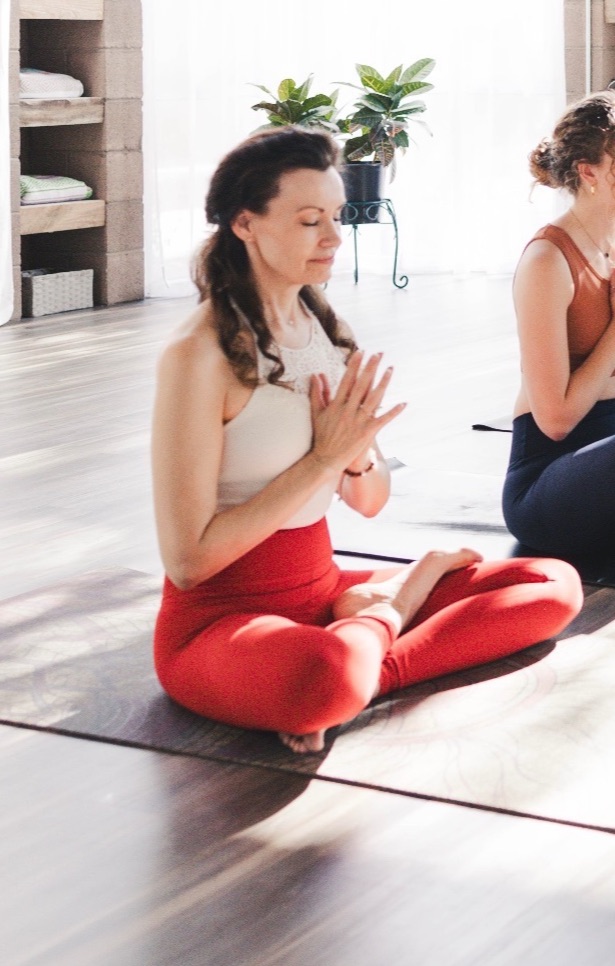
In my pursuit to SEEK 2022, I recently listened to an insightful Centering Prayer Summit (Christian contemplation/meditation event) sponsored by Closer Than Breath. One of the presenters, Dr. Jana Rentzel, lectured on the embodied practice of Guard of the Heart. I loved it so much, and since it’s all things HEART this month, I’ll share this powerful, yet simple practice with you. 

Our spiritual heart is our inner room, our innermost core and being, where we commune with God, experience our true self, and abide in perfect peace. “Guard your heart above all else, for everything you do flows from it.” (Proverbs 4:23) Our heart’s desire is to be light, open and free — yet through life’s circumstances and our thoughts and emotions about them — we can feel a sense of tightening or uneasiness in our heart space. The spiritual heart is a valve, just like the physical heart. When our heart closes off and we lose our peace, it signals we may be off course. This is when it’s helpful to practice Guard of the Heart (also referred to as Watchfulness or Presence Practice).

Guard of the Heart Practice

1. Right when you notice a tightening or uneasiness in the heart area, witness the disturbing emotion or troubling situation, and let it move through you. Take some deep breaths as you feel the sensations in and through the body. Staying present, before thoughts entertain or attach to the situation, return your heart to rest with God. 

2. Let go and give everything to the Lord as a gift. Visualize releasing the tightness and uneasiness to God. The Lord knows what to do in every circumstance. Let go of the need for control or approval. Open your heart to God’s loving and wise presence within. Release negativity and return to peace with God. When we anchor into Divine love, we reunite our human will with Divine will, and move beyond our desires and reactive tendencies. “And the peace of God which surpasses all understanding, will guard your hearts and minds in Christ Jesus.” (Philippians 4:7)

This practice can be used anywhere, at anytime, throughout our daily lives.

“When My Presence is the focal point of your consciousness, all the pieces of your life fall into place. As you gaze at Me through the eyes of your heart, you can see the world around you from My perspective. The fact that I am with you makes every moment of your life meaningful.” (from Jesus Calling by Sarah Young)

Try Guard of the Heart practice this week, and let me know how it works for you. ❤️